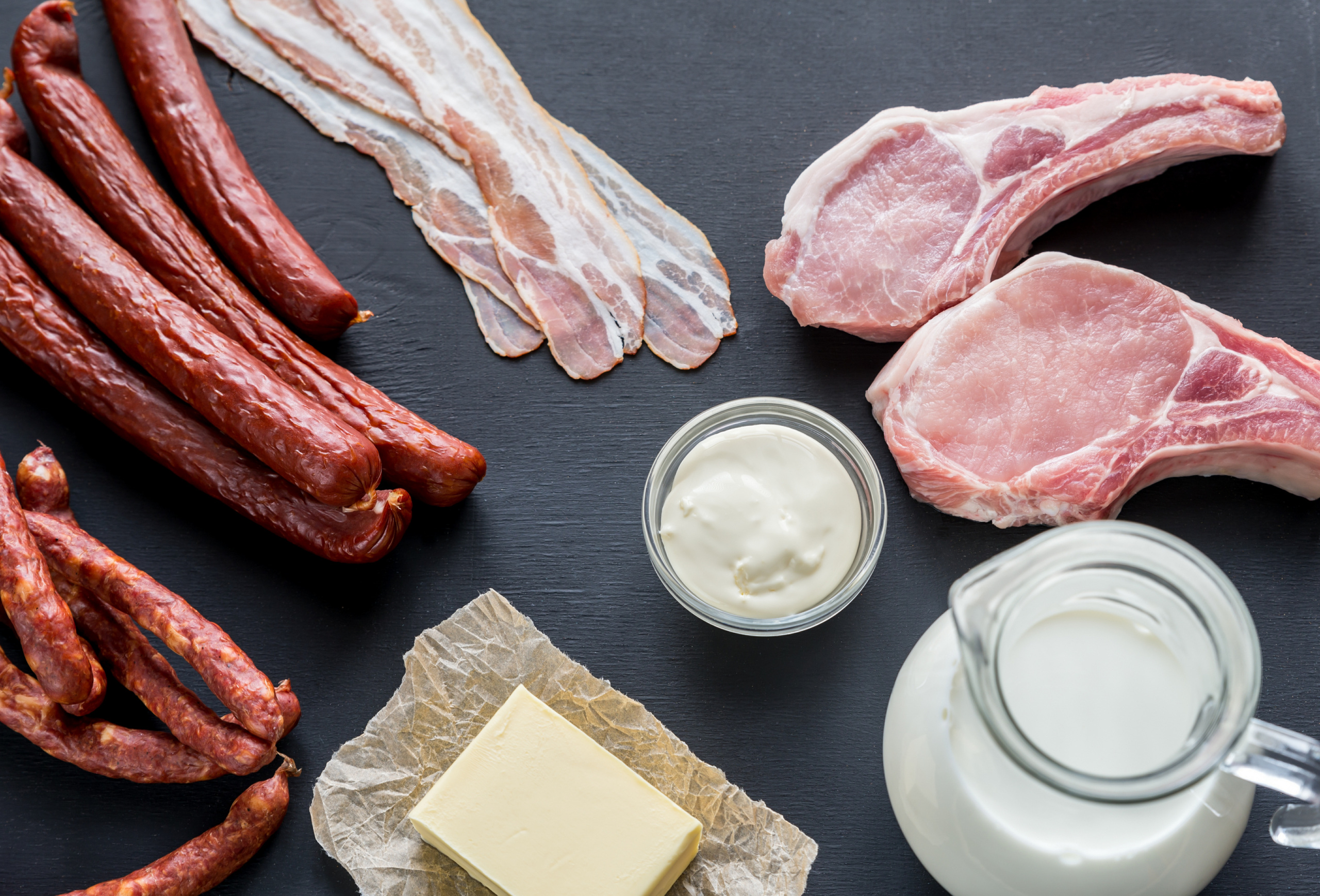
Saturated fats have long been demonized as a major contributor to heart disease and other health issues, but recent research suggests that this may not be the case. In fact, consuming saturated fats can actually have a number of health benefits.
- Saturated fats can improve cardiovascular health. A study published in the American Journal of Clinical Nutrition found that people who consumed more saturated fat had a lower risk of heart disease, compared to those who consumed more polyunsaturated fats. Another study published in the journal Lipids found that saturated fats can improve cholesterol levels, specifically raising HDL (good) cholesterol and lowering LDL (bad) cholesterol.
- Saturated fats can improve brain health. Saturated fats are a major component of brain tissue and are essential for proper brain function. A study published in the journal Lipids found that a diet high in saturated fats was associated with improved cognitive function in older adults.
- Saturated fats can improve bone health. Saturated fats are important for the absorption and metabolism of calcium, which is essential for strong bones. A study published in the American Journal of Clinical Nutrition found that women who consumed more saturated fat had higher bone density, compared to those who consumed less.
- Saturated fats can improve liver health. Saturated fats have been shown to improve liver function and protect against liver damage. A study published in the Journal of Lipid Research found that a diet high in saturated fats was associated with improved liver function in people with nonalcoholic fatty liver disease.
It’s important to note that not all saturated fats are created equal, and some sources of saturated fats may be healthier than others. For example, saturated fats from animal sources, such as butter and red meat, may be beneficial for human health.
Consuming saturated fats from animal sources can provide a number of health benefits, including improved cardiovascular, brain, bone and liver health.
Follow-up PubMed Article – Saturated fat: villain and bogeyman in the development of cardiovascular disease?
Aims: Cardiovascular disease (CVD) is the leading global cause of death. For decades, the conventional wisdom has been that the consumption of saturated fat (SFA) undermines cardiovascular health, clogs the arteries, increases risk of CVD, and leads to heart attacks. It is timely to investigate whether this claim holds up to scientific scrutiny. The purpose of this paper is to review and discuss recent scientific evidence on the association between dietary SFA and CVD.
Methods and results: PubMed, Google scholar, and Scopus were searched for articles published between 2010 and 2021 on the association between SFA consumption and CVD risk and outcomes. A review was conducted examining observational studies and prospective epidemiologic cohort studies, randomized controlled trials (RCTs), systematic reviews and meta-analyses of observational studies and prospective epidemiologic cohort studies, and long-term RCTs. Collectively, neither observational studies, prospective epidemiologic cohort studies, RCTs, systematic reviews, and meta-analyses have conclusively established a significant association between SFA in the diet and subsequent cardiovascular risk and coronary artery disease, myocardial infarction, or mortality nor a benefit of reducing dietary SFAs on CVD rick, events, and mortality. Beneficial effects of replacement of SFA by polyunsaturated or monounsaturated fat or carbohydrates remain elusive.
Conclusion: Findings from the studies reviewed in this paper indicate that the consumption of SFA is not significantly associated with CVD risk, events, or mortality. Based on the scientific evidence, there is no scientific ground to demonize SFA as a cause of CVD. SFA naturally occurring in nutrient-dense foods can be safely included in the diet.
Reference to preceding PubMed Publishing. © The Author(s) 2022. Published by Oxford University Press on behalf of the European Society of Cardiology. All rights reserved. For permissions, please email: journals.permissions@oup.com.
References: –https://www.ncbi.nlm.nih.gov/pmc/articles/PMC5731252/ –https://www.ncbi.nlm.nih.gov/pmc/articles/PMC5341939/ –https://www.ncbi.nlm.nih.gov/pmc/articles/PMC5341939/ –https://www.ncbi.nlm.nih.gov/pmc/articles/PMC5341939/ –https://www.ncbi.nlm.nih.gov/pmc/articles/PMC5341939/ –https://www.ncbi.nlm.nih.gov/pmc/articles/PMC4387693/
Link to PubMed Study: https://pubmed.ncbi.nlm.nih.gov/36059207/
 Redneck Of Hi Tech